


Dice Tac Toe
4.786.00 Reviews
App Specs
- Version
- 1.2.25661
- Updated On
- License
- Free
- Downloads
- 10,000+
- Developer
- FunCraft Games
- Categories
- Board
- Platform
- Android
Screenshots

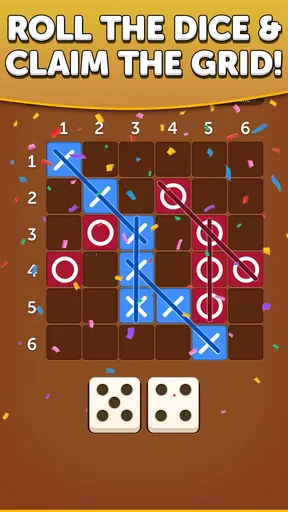


 Analysis by AppCompare
Hey there! So, I recently got my hands on this app called Dice Tac Toe, and let me tell you, it’s a quirky little game that combines the classic tic-tac-toe with the unpredictability of dice rolling. If you’re into casual gaming with a twist, this might just be your next time-waster.
Who will enjoy this kind of board game?
I’d recommend it most to people who already like short, familiar board games but want a little more uncertainty than ordinary tic-tac-toe offers. The appeal is not a huge ruleset or a long campaign; it is the small decision of how to use the move a roll gives you. That makes it a convenient choice for a quick head-to-head break, especially if both players enjoy thinking a turn ahead while accepting that a die can disrupt a tidy plan.
It is also a reasonable pick for mixed-experience groups. Someone who knows the basic grid game can understand the broad idea quickly, while a more strategic player can look for ways to make each permitted move count. I would not choose it for a group that wants a deep board-game evening, though. Its central idea stays compact, and players who prefer evolving rules, a large variety of boards, or extended progression should look for a more substantial game.
How the dice change familiar decisions
In standard tic-tac-toe, the available squares are the main puzzle: you watch the lines, claim the center or corners, and respond to threats. Here, the roll narrows your immediate choice, so the useful question becomes not only “Where would I like to play?” but “What can I do with this result?” That shift is the game’s most interesting trade-off. It can rescue a match from feeling automatic, but it can also mean you cannot make the exact defensive move you would choose in the classic version.
My practical tip is to scan the whole grid before acting, rather than focusing only on the line you are building. A roll may make a tempting square available, but taking it could leave an opponent’s immediate threat unanswered or give up a useful position elsewhere. When the result limits your options, compare the available move with the board’s biggest danger first. This makes the luck feel like a constraint to reason around, not just a surprise to react to.
That also explains why it suits casual play better than a strict test of pure skill. If you want every outcome to come from a wide-open choice, traditional tic-tac-toe is the cleaner alternative. If you enjoy adapting under a small random constraint, the dice add a distinctive bit of tension without changing the board-game feel completely.
A practical fit for short breaks
A realistic use for it is a spare few minutes with a friend while waiting for food or taking a break between other tasks. The board and turn-based rhythm make it easier to pause mentally between moves than an action game, and a player can consider a position without needing quick reflexes. I would still avoid starting a match when you have to respond to something immediately; even a brief game works better when both people can pay attention to the board and take turns comfortably.
Worth Reading Before You Choose

Flipboard Shows What News Apps Must Do Beyond the Feed

Switching to Android Auto Means Rethinking Your Driving Routine

Google Calendar Makes a Crowded Week Easier to Manage

Ludo King Makes the Most of the Minutes Between Plans

Baby Panda World Brings Quick Play to Modern Phones, but Its Game Library Feels Busy

ESPN’s Live Game View Makes Following Close Games Easier
For solo play, the single-player option gives you a way to test decisions without arranging a second player. The multiplayer choice is there for people who want competition, and the original experience describes play with friends or random opponents online. If you mainly want a dependable offline pastime, check what play options are available to you before relying on it in a place with poor connectivity; I would not assume every mode works the same way without a connection.
Compared with a paper grid, the app handles the digital match and dice-based turn structure for you, while pen-and-paper tic-tac-toe remains easier to start anywhere and needs no device. Compared with conventional mobile board games, this one asks for less time and rules knowledge, but offers a narrower kind of strategic variety. I see it as a compact alternative for a small mental reset, not a replacement for a full board-game collection.
A Fresh Take on a Timeless Classic
When I first downloaded Dice Tac Toe, I wasn’t sure what to expect. I mean, how much can you really do with tic-tac-toe, right? But, boy, was I surprised! This game adds a layer of strategy and luck that I didn’t see coming. Instead of the usual Xs and Os, you roll dice to determine your move. It sounds simple, but it adds a whole new level of excitement and unpredictability.
Game Mechanics and Features
The game starts off by letting you choose between single-player and multiplayer modes. Being the social butterfly that I am, I dived right into multiplayer. Competing against friends or random opponents online adds a fun competitive edge. But if you’re more of a lone wolf, the AI in single-player mode is surprisingly clever and provides a decent challenge.
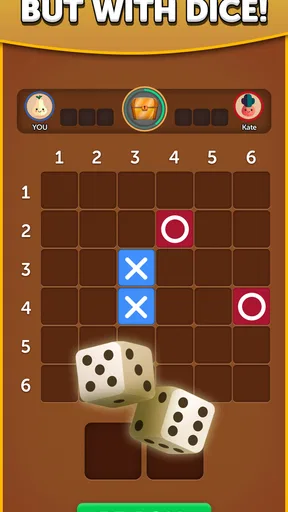
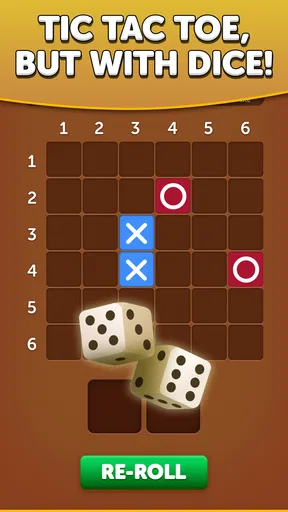
The dice rolling element is where the game really shines. Each turn, you roll a die, and the number you get dictates where you can place your piece on the grid. So, it’s not just about blocking your opponent or forming a line anymore — you’ve got to strategize based on your roll. It keeps you on your toes and makes every game unique.
Readability, navigation, and comfort
The design of Dice Tac Toe is sleek and modern. The interface is intuitive, so even if you’re not tech-savvy, you’ll find it easy to navigate. The graphics are bright and visually appealing, which adds to the overall fun of the game. Plus, the sound effects are on point — they’re subtle enough not to be annoying but add a nice touch to the gameplay.
For me, the strongest accessibility advantage is the familiar grid and turn-by-turn pace: there is little to learn before someone can understand the basic objective. But knowing the rules is not the same as being able to comfortably use the interface. A player who benefits from larger text, stronger contrast, screen-reader support, or a quieter presentation should check the game directly on their device before settling in. I would not treat bright visuals or a simple board as proof that every detail is easy for every player to perceive.
Motor and sensory considerations
Because this is a board game rather than a reflex test, the central challenge is choosing a move, not reacting at high speed. That can make it a calmer option than many action games, and a turn-based exchange gives players a moment to think. Still, the dice and grid require someone to follow the result and select a square. If precise touch input is difficult, or if visual details are hard to distinguish, that interaction may be a barrier rather than a benefit.
I also like that the sound is described as subtle, but preferences vary: a quiet effect can still be distracting in a silent room or unwelcome for someone sensitive to game audio. I’d try a short session in the setting where I plan to play and check the device’s own sound controls. That is more useful than assuming a light presentation will suit everyone. The game is best approached at a comfortable pace, with enough time to inspect the board before committing to a move.
Why You Should Give It a Roll
One of the things I really appreciate about this game is how it bridges the gap between simplicity and strategy. It’s easy to pick up and play, making it perfect for those quick breaks during the day. Yet, the strategic element means you’ll want to keep playing to refine your skills and, let’s face it, beat your friends.
Another cool feature is the game’s adaptability. You can play a quick match or dive into a longer session if you’ve got the time. Whether you’re commuting, waiting in line, or just chilling at home, Dice Tac Toe fits perfectly into those little pockets of free time.
Where the fit has limits
A short session can fit a quiet wait, but a moving commute is a different situation. If you need one hand free, have to watch where you are walking, or expect frequent interruptions, a game that asks you to inspect a board and make a considered move may not be the most comfortable choice at that moment. I would save it for a seat, a queue where I can stop safely, or a relaxed break rather than trying to play while navigating a busy place.
There is also a distinction between being easy to learn and being equally accessible to everyone. Familiar rules help, but they do not settle questions about how clearly each square, turn, or result appears on a particular screen. If you are choosing it for someone with specific visual, motor, or sensory needs, the sensible approach is to test a match together first. If the display or touch interaction proves frustrating, a physical grid, another digital board game with controls that better suit that player, or a game designed around their needs may be a better option.
What to know before installing
FunCraft Games makes this free board game, and its store page gives it an average rating of 4.7 from around a thousand ratings, with over ten thousand installs. It is rated for Everyone and was released on February 27, 2026; version 1.2.25661 requires Android 7.0 or newer. I would regard those figures as useful context, not a guarantee that the game will suit your device or play preferences.
The download itself is free, but the game offers optional in-app purchases, with items ranging from $0.49 to $49.99. If you are installing it for a child or simply prefer not to make accidental purchases, review the purchase controls on your device before handing it over. The Everyone rating is a broad age classification; it does not replace a parent’s judgment about online interaction or spending settings.
One practical question is whether you can enjoy it without spending. Since the game is free to download and purchases are listed separately, I would start with the free experience and decide whether anything else matters to me rather than treating an in-app purchase as necessary. Another is whether multiplayer suits your plans: the described online competition can be appealing when you want an opponent, while solo play is the more straightforward choice when you simply want to practice or pass a quiet moment.
The Verdict
All in all, Dice Tac Toe is a delightful mix of nostalgia and novelty. It takes a game we all know and love and spices it up with a bit of chance and strategy. It’s perfect for casual gamers looking for something light yet engaging. So, if you’re ready to roll the dice and test your skills, this game is definitely worth a download. Give it a try and see if it’s as addictive for you as it is for me!
My recommendation comes with a clear caveat: it is a better fit for players who enjoy adapting to a restricted move than for anyone who wants complete control over every turn. I would try it for a low-pressure match, see whether the board is comfortable to read and use, and keep the purchase settings in mind if a child will play. That makes it a promising small-scale board-game diversion, while leaving room to choose a paper grid or a more accessible alternative when the situation calls for one.
Pros
- Engaging blend of strategy and luck.
- Simple interface for easy navigation.
- Quick matches for on-the-go gaming.
- Multiplayer mode enhances competition.
- Minimal ads for uninterrupted play.
Cons
- Limited customization options.
- Sound effects can be repetitive.
- No offline mode available.
- Occasional connectivity issues.
- Tutorial lacks depth for beginners.
FAQs for Dice Tac Toe
What is Dice Tac Toe and how does it work?
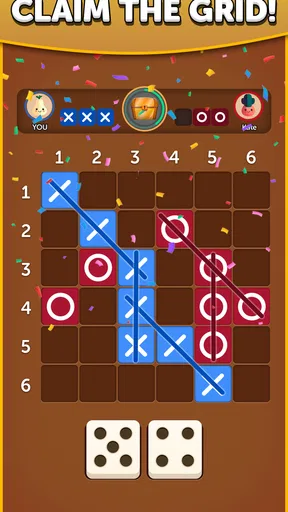
Dice Tac Toe is an innovative blend of dice rolling and tic-tac-toe strategy. Players roll dice to determine their moves on a classic tic-tac-toe grid. The objective is to align three marks in a row, column, or diagonal while employing strategic dice rolls to outmaneuver opponents. It's a fun twist on two classic games.
Is Dice Tac Toe suitable for all ages?
Yes, Dice Tac Toe is designed to be family-friendly and suitable for players of all ages. The game's simple mechanics make it accessible to younger players, while the strategic elements provide a challenge for adults. It's a great way to enjoy quality time with family and friends.
Can Dice Tac Toe be played offline?
Yes, Dice Tac Toe offers an offline mode where you can play against AI opponents. This feature makes it convenient for those times when you don't have internet access. However, there's also an online multiplayer mode for a more interactive experience with friends or other players globally.
Are there in-app purchases in Dice Tac Toe?
Dice Tac Toe includes optional in-app purchases. These purchases may offer cosmetic enhancements or additional features that enhance the gaming experience. However, the core gameplay remains fully accessible without any purchases, ensuring everyone can enjoy the game without spending money.
How does Dice Tac Toe ensure fair play?
Dice Tac Toe utilizes advanced algorithms to ensure fair and random dice rolls. The game is designed to prevent cheating and provide a balanced playing field for all participants, whether you're playing against AI or real opponents. This ensures a fun and fair experience for everyone involved.


